So this year I vowed to not only grow more colour for my own uses for my own practice, but also for workshops to empower others to connect to natural dyes, also to make sure I had enough plants to give to local growers where I’ll be holding dye workshops over the summer, as well as sell a few to folks who’d like to start their own dye garden.
I’ve been dabbling over the years well since my college days producing my own palette of natural colours. Back in the 80s I found it almost impossible to learn especially as I attended an industrial textiles course who’s emphasis was on larger scale production which means many cones of yarn dyed in autoclaves to Pantone shade with all the testing for fastness and durability that comes with industrial standards. Thankfully now, with the increasing awareness and new generations willing to do their own experiments as well as dyestuffs and mordants readily available at the touch of a buy it now button we all have the chance to explore an alternative to synthetic dyes. I’m embracing my own practice, connecting to nature both in colour and physically maintaining the dye plants.
With the purchase of additional garden ground, my children all grown and flown the nest, let alone living in what has been called Scotland’s larder – Fife- so no need to grow my own foods, I can indulge in my passion, my dye garden. Generations of my family have worked the land, I grew up with the double dig necessary to grow but I knew there could be a better way. Learning from fibreshed and regenerative agriculture in general, knowing that satellites can now see carbon being released when soil is broken or tilled as they say in the USA what we really need is to sequestrate carbon back into the soil. My mind if we all do a little bit then a lot can be achieved. I delved deep into the no dig method and came across Maria Thun and her biodynamic gardening experiments in Germany. I call myself spiritual rather than the Church of Scotland religion I was brought up in, this planning when to grow by the phases of the moon resonated with me. Together with the fact the “new” ground had been under Teram and red chipping for 25 years my no dig dye garden experiment began.
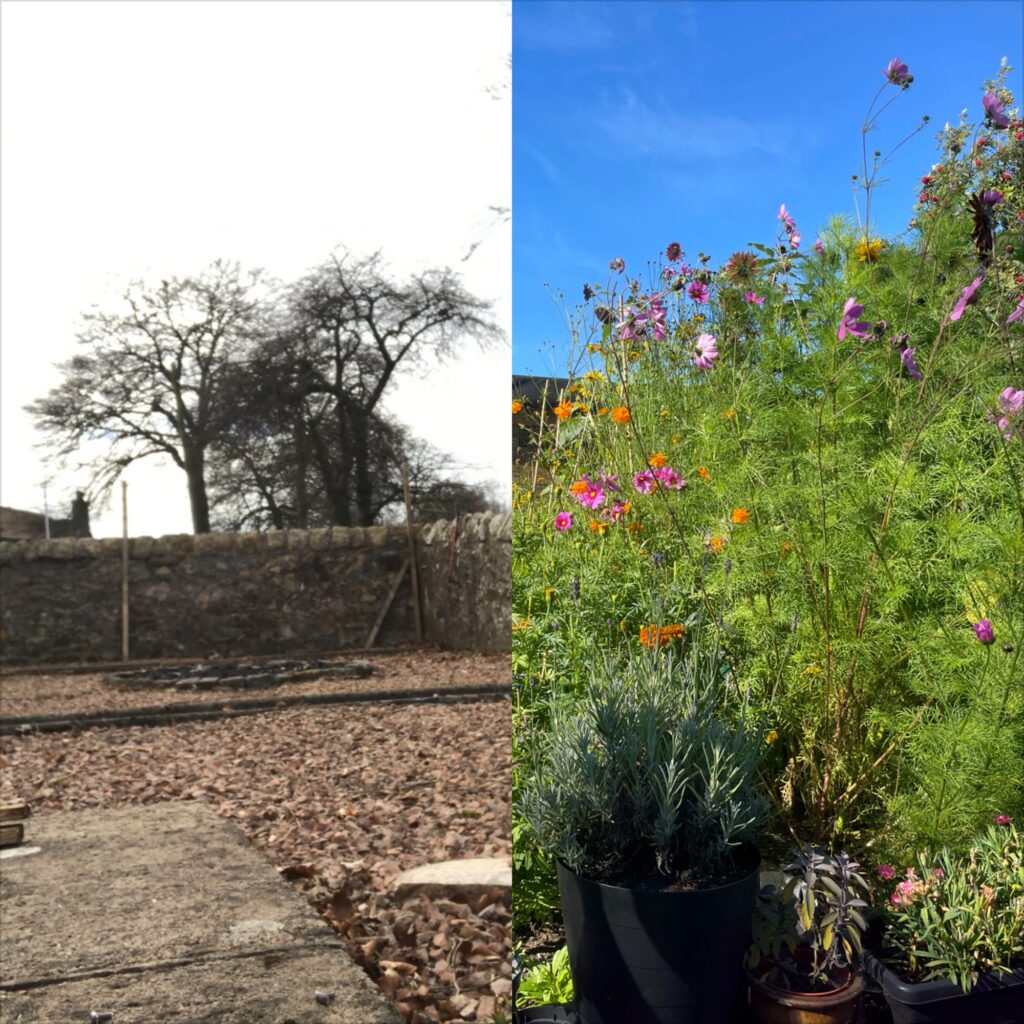
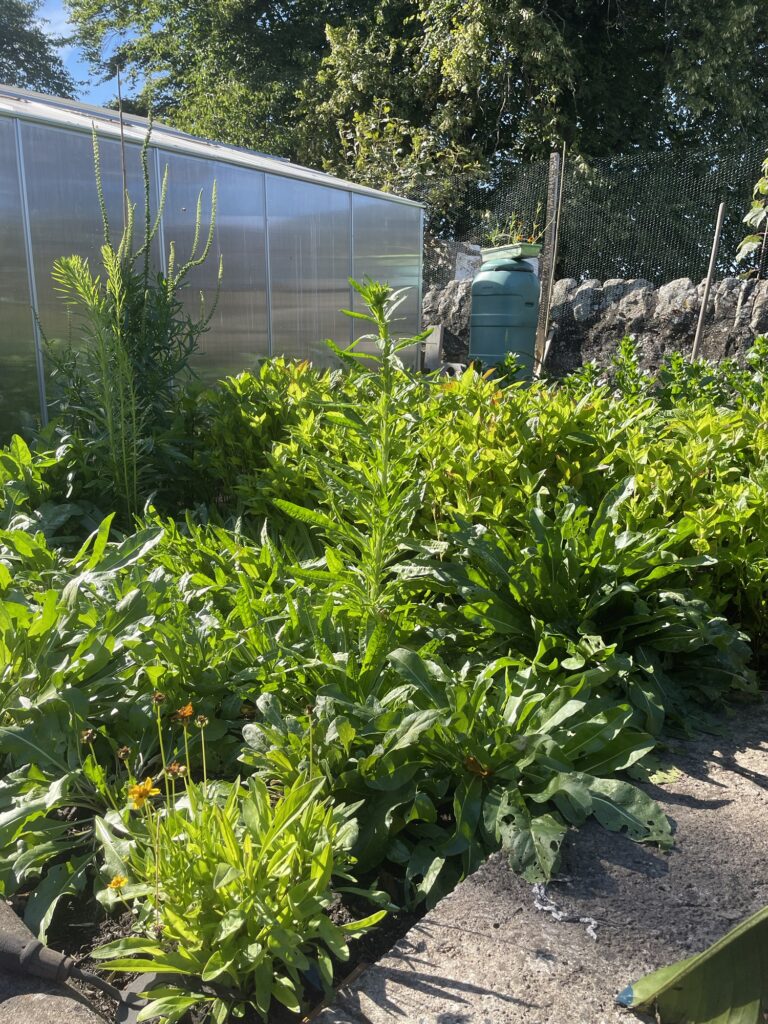
It’s hard when planning a dye garden although you might research sizes and spacing there were none around for me to visit. Would these plants grow next to the North Sea! onward with the experience. I didn’t know the quality, ph of my soil or if the conditions were favourable. I had crowdfunded for a new workshop space a 20’ one with its own 10’ lean to greenhouse- my dream was to watch my indigo grow as I worked and for students to do so too. As it happened the tall dye sunflowers I had planted along with the greenhouse gave a perfect microclimate for my outdoor indigo let alone the other plants.
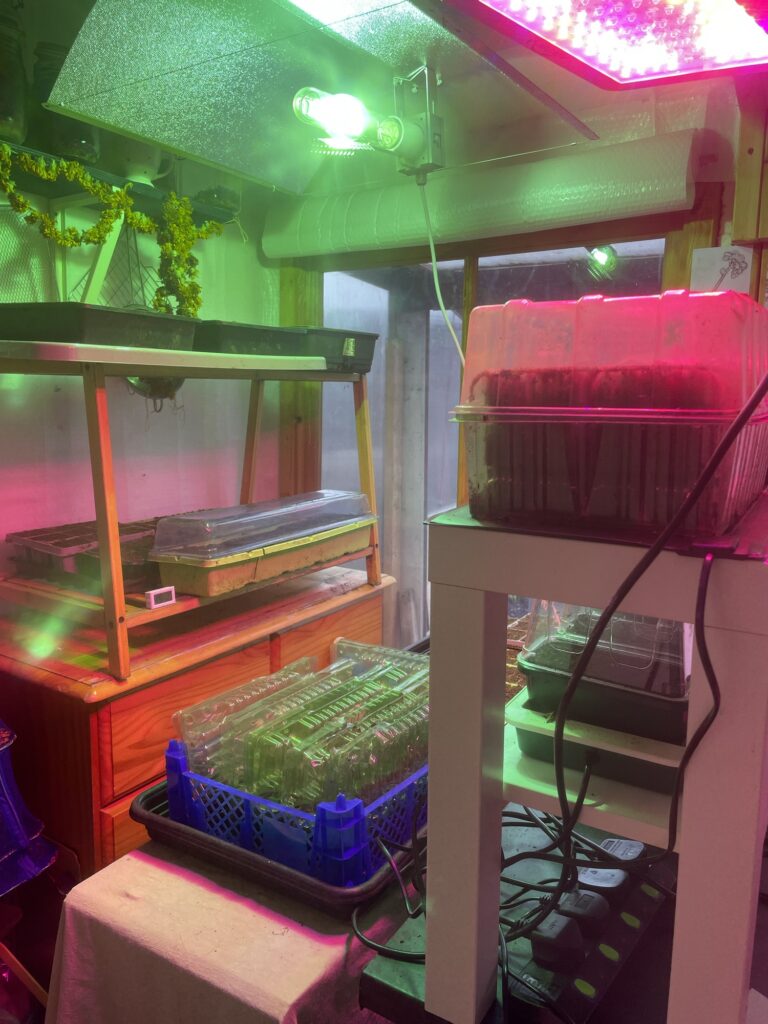
It worked better than expected so onward for 2024 upscaling my dye plant production Word spread and a kind donation of 3! Professional grow system along with my own heat mats enabled me to start my seeds off in the dead of a Scottish winter.
I quite enjoyed the mindfulness of the seedling rearing and the almost endless pricking out definitely a new system will be adopted for next year. Maybe almost a mini production as I’d love to see dye plants available to the public in nurseries or fairs. I don’t think I’m grandiose in that dream.
I’ve supplied 2 local estates and enough for workshops here at Balgarvie Weaving dye house this summer too. If you’d like to attend one just head over to Eventbrite